Internal combustion engines are inherently inefficient; upwards of 60% of the energy stored in diesel or gasoline is converted directly into heat rather than mechanical motion. When a truck is towing a 20,000 lb trailer up a 6% grade for ten miles, the thermal load placed on the cooling system is staggering. Factory cooling systems are designed for average use cases; pushed to the extreme, they fail, resulting in localized boiling, blown head gaskets, and cracked engine blocks.
Radiator Construction: Copper-Brass vs. Aluminum
For decades, heavy-duty radiators were constructed of copper tubes and brass fins. Copper is an excellent thermal conductor, but these units were heavy, and the lead solder used to join the tubes to the headers restricted heat transfer. Furthermore, the strength limits of copper required smaller, more numerous tubes.
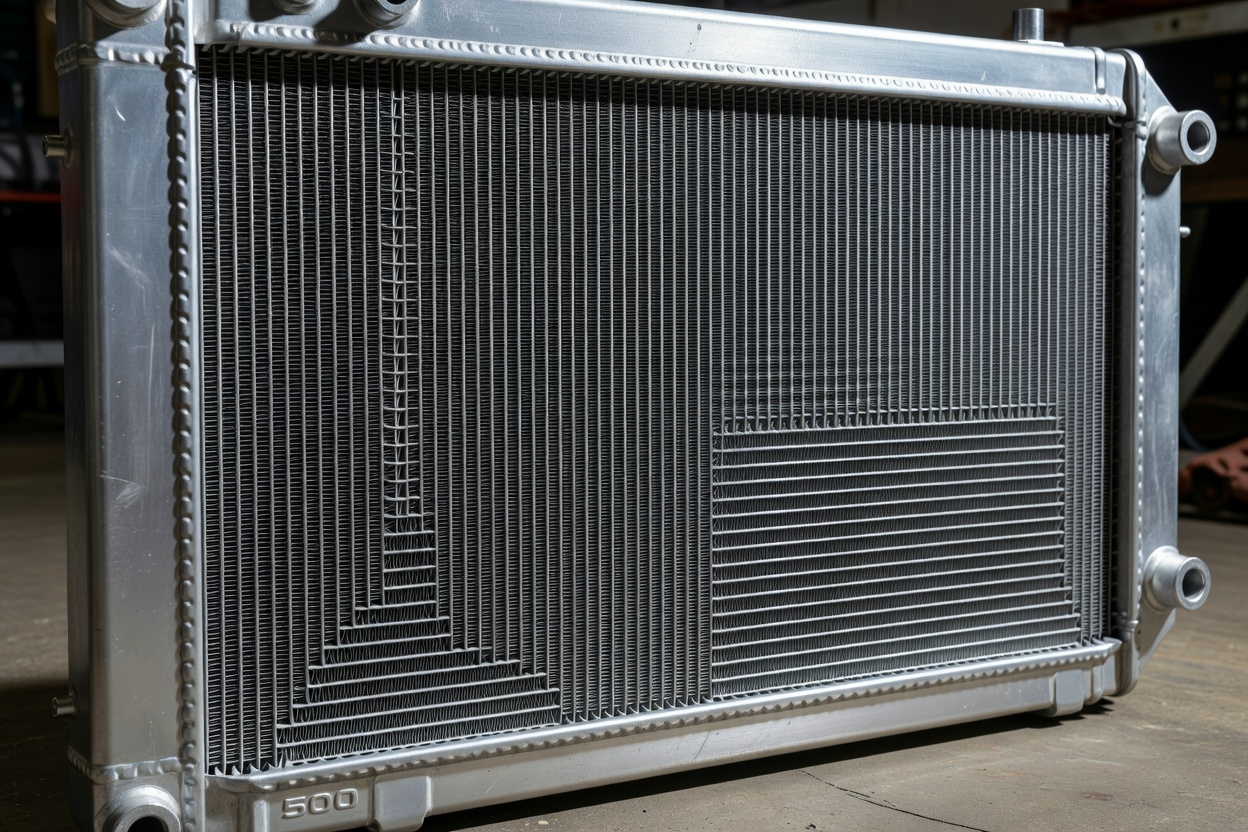
Modern high-performance cooling systems utilize fully brazed aluminum construction. Aluminum allows for wider, stronger tubes (often 1-inch to 1.5-inch wide). Wider tubes drastically increase the surface area in direct contact with the cooling fins. A high-quality two-row aluminum radiator will often outflow and out-cool an older four-row copper-brass radiator.
Core Thickness and Fluid Capacity
Upgrading the radiator core thickness provides two distinct advantages. First, it increases the total volume of coolant in the system, creating a larger thermal buffer before the system reaches boiling point. Second, it provides a larger fin surface area to exchange heat with the ambient air passing through the grille.
However, thicker is not infinitely better. If a core becomes too thick (exceeding 3 inches in some applications), ambient air slows down too much as it passes through the dense fin pack, reducing the efficiency of the heat exchange at the rear of the core.
| Radiator Type | Coolant Capacity | Thermal Transfer Efficiency |
|---|---|---|
| Stock Plastic/Aluminum | Baseline | Adequate for daily use |
| 2-Row All-Aluminum | +20% over stock | Excellent (Ideal for towing) |
| 3/4-Row Copper-Brass | +15% over stock | Moderate (Prone to solder failure) |
Airflow Management: Mechanical vs. Electric Fans
A radiator is useless without airflow. At highway speeds, the ram-air effect forces sufficient air through the heat exchangers. But when climbing a steep grade at low speeds, the engine relies entirely on the cooling fan.
Heavy trucks utilize engine-driven mechanical fans connected via a thermostatic fan clutch. When under-hood temperatures rise, a bi-metal spring in the clutch engages, locking the fan to the water pump pulley. These mechanical fans can move an astounding amount of air—often exceeding 10,000 Cubic Feet per Minute (CFM).
While aftermarket dual electric fans remove parasitic drag from the engine (improving throttle response and freeing up minor horsepower), they rarely move enough air to replicate a locked mechanical fan under severe load. For dedicated heavy hauling, retaining the mechanical fan (and ensuring the clutch is fully operational) is paramount.