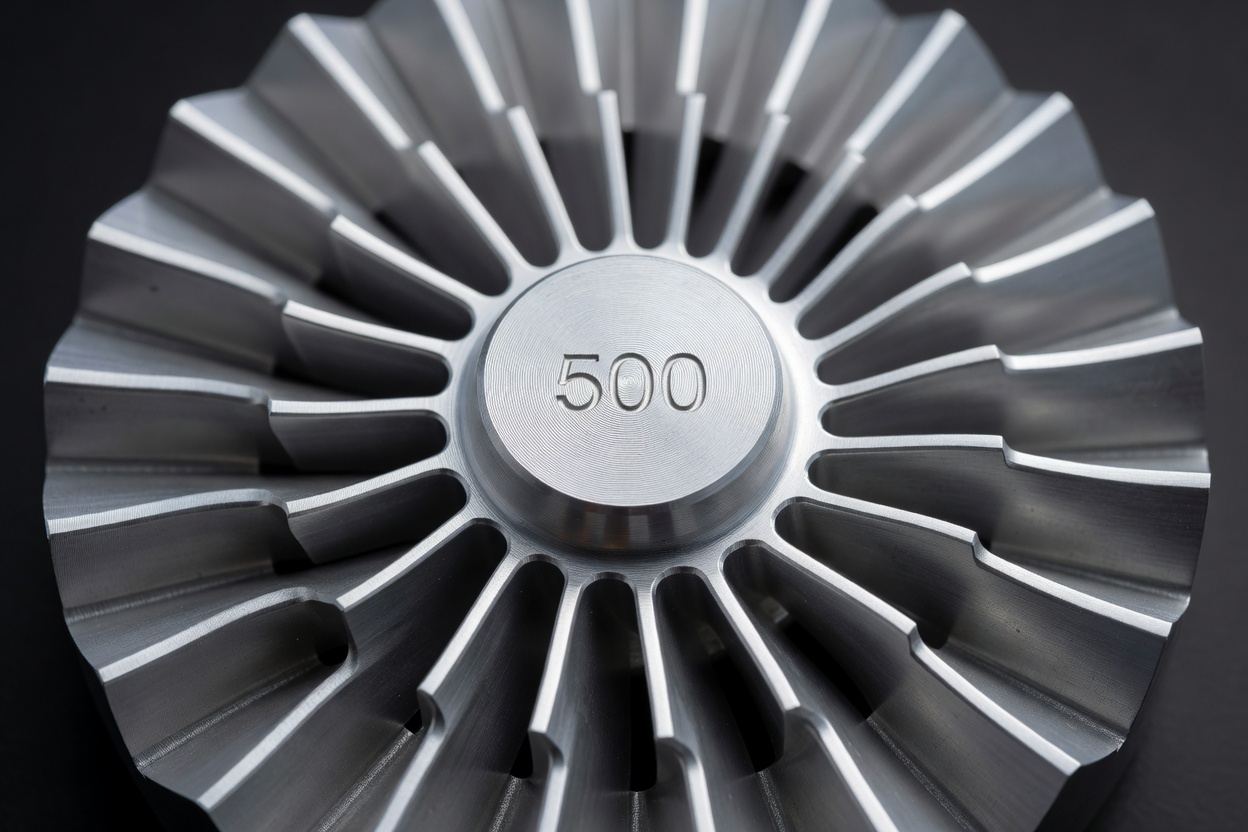
An internal combustion engine is essentially an air pump. The more air you can force into the cylinders, the more fuel you can burn, yielding a proportional increase in power. In heavy-duty applications, naturally aspirated engines are practically obsolete; the turbocharger is a mandatory component for achieving required payload capacities while meeting emissions standards.
The Mechanics of Boost
A turbocharger consists of two connected halves: a turbine and a compressor. Hot, expanding exhaust gases exiting the engine are routed through the turbine housing, spinning a turbine wheel at speeds that can exceed 100,000 RPM. This turbine wheel is connected via a solid shaft to a compressor wheel located in the intake tract.
As the compressor wheel spins, it draws in ambient air, compresses it, and forces it into the engine's intake manifold under pressure (boost). By utilizing exhaust gas energy that would otherwise be wasted out the tailpipe, a turbocharger drastically increases volumetric efficiency.
Variable Geometry Turbos (VGT)
Traditional fixed-geometry turbos face an engineering compromise: a small turbine housing spools up quickly at low RPMs but chokes exhaust flow at high RPMs (creating excessive backpressure), while a large turbine housing flows well at high RPMs but suffers from severe "turbo lag" at low speeds.
Modern heavy-duty trucks solve this with Variable Geometry Turbochargers (VGT). A VGT features movable vanes inside the turbine housing. At low engine speeds, an electronic actuator closes these vanes, restricting the exhaust flow path. This acts like placing your thumb over a garden hose, increasing the velocity of the exhaust gas and spinning the turbine wheel rapidly to build instant boost.
As engine RPM and exhaust volume increase, the vanes open, increasing the housing's effective volume to allow maximum flow and prevent exhaust backpressure from stifling the engine. This provides a broad, flat torque curve essential for towing heavy loads.
Charge Air Cooling (Intercooling)
When air is compressed, it generates heat (ideal gas law). Hot air is less dense than cold air, meaning it contains fewer oxygen molecules per cubic inch. Furthermore, introducing extremely hot compressed air into the engine drastically raises Exhaust Gas Temperatures (EGTs), which can lead to catastrophic engine failure (such as melted pistons or cracked cylinder heads).
To combat this, the pressurized air exiting the compressor is routed through a Charge Air Cooler (CAC), commonly known as an intercooler, before it enters the engine. The intercooler acts as a heat exchanger, utilizing ambient airflow at the front of the truck to drop the charge air temperature by 100°F to 200°F. Upgrading the intercooler to a unit with a thicker core and cast aluminum end tanks is one of the most effective ways to lower EGTs when towing.
| Component | Function | Common Failure Point |
|---|---|---|
| Turbine Wheel | Extracts exhaust energy | Soot buildup causing imbalance |
| VGT Actuator | Adjusts exhaust velocity | Electronic failure due to heat |
| Compressor Wheel | Pressurizes intake air | Dust ingestion (dusted turbo) |
| Journal Bearings | Supports shaft via oil film | Oil starvation or coking |
Maintenance and Reliability
Turbochargers operate in an extreme environment. The turbine side is exposed to exhaust gases exceeding 1,200°F. The shaft joining the two wheels relies entirely on a pressurized film of engine oil (and sometimes engine coolant) for lubrication and cooling.
The most common cause of turbo failure is oil-related. Shutting down a truck immediately after a heavy pull while the turbo is still scorching hot causes the oil residing in the bearings to boil and solidify (coking). Allowing the engine to idle for two to three minutes before shutdown allows cooler oil to circulate and bring the core temperatures down to a safe level.