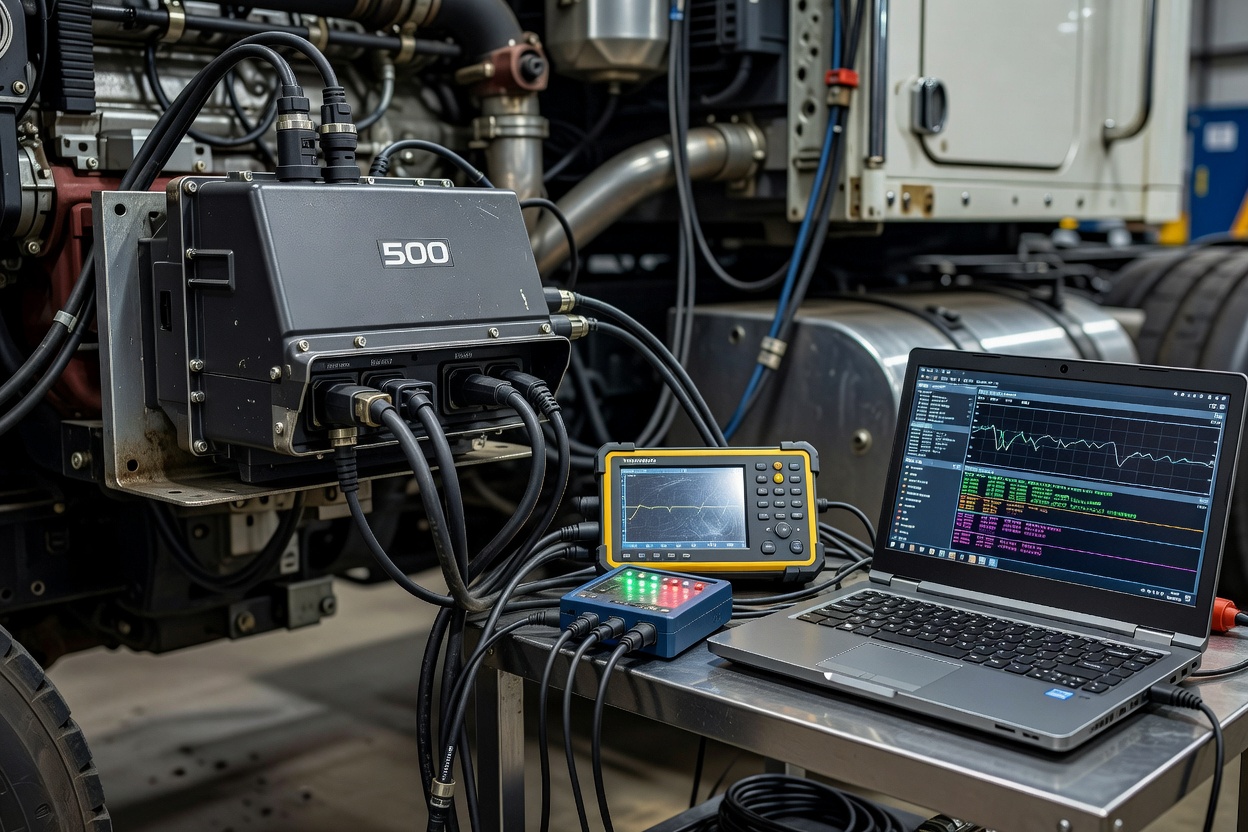
Modern commercial vehicle engines are strictly controlled by an Engine Control Unit (ECU). The ECU relies on factory-programmed mapping tables that dictate exactly how much fuel to inject, when to inject it, and how much boost the turbocharger should produce under any given load. Factory tunes are conservative by design, built to account for poor fuel quality, neglected maintenance, and strict global emissions standards.
How Remapping Works
ECU tuning, or remapping, involves downloading the factory software, altering specific parameters within the data tables, and flashing the modified software back onto the control module. In a diesel engine, power is primarily limited by the amount of fuel delivered. By commanding the injectors to stay open microseconds longer (pulse width) or by increasing common rail fuel pressure, tuners introduce more fuel into the cylinder.
However, simply adding fuel creates excessive heat and black smoke. A proper remap simultaneously commands the Variable Geometry Turbo (VGT) actuator to increase boost pressure, supplying the necessary oxygen to burn the extra fuel efficiently.
Benefits of Proper Calibration
When executed correctly by a reputable calibrator, the benefits of a remap are substantial:
- Increased Torque: Gains of 100 to 200 lb-ft of torque at the rear wheels are common, drastically reducing the effort required to pull heavy grades.
- Optimized Shifting: For trucks with electronic transmissions (like the Allison 1000 series or Aisin AS69RC), transmission control module (TCM) tuning raises line pressure to prevent clutch slip under the new power loads and optimizes shift points.
- Fuel Economy: Paradoxically, increasing power often improves fuel economy by 1 to 2 MPG unladen. By advancing injection timing, the engine operates more efficiently, extracting more mechanical energy per stroke.
| Tune Level | HP Increase | Torque Increase | Hardware Required |
|---|---|---|---|
| Tow / Eco | +30 to 50 HP | +60 to 100 lb-ft | None (Stock safe) |
| Street / Performance | +80 to 120 HP | +150 to 250 lb-ft | Cold Air Intake, Exhaust |
| Max Effort | +150 to 250+ HP | +300 to 500+ lb-ft | Lift pump, Trans upgrade, Head studs |
The Risks: Heat, Hardware, and Warranty
Tuning is not without significant risk. The primary enemy of a tuned diesel engine is Exhaust Gas Temperature (EGT). Factory programming cuts fuel when EGTs approach 1,350°F to protect the turbocharger and pistons. Aggressive aftermarket tunes may raise or remove these limiters. Operating a truck at 1,500°F+ for extended periods on a steep grade will melt pistons and warp manifolds.
Furthermore, tuning inherently increases cylinder pressures. Pushing too much boost and fuel can exceed the clamping force of the factory cylinder head bolts, resulting in a blown head gasket. For "Max Effort" tunes, installing aftermarket head studs is a mandatory prerequisite.
Legally and financially, any alteration to the ECU software will instantly void the manufacturer's powertrain warranty. Dealership diagnostic tools automatically flag modified ECMs, even if the factory software has been reflashed before service.
Emissions Compliance
It is vital to distinguish between emissions-intact tuning and "delete" tuning. Historically, tuners would shut off the EGR (Exhaust Gas Recirculation) and DPF (Diesel Particulate Filter) systems. This practice is now heavily regulated and illegal for on-road use in most jurisdictions. Modern tuning focuses on optimizing performance while keeping all factory emissions equipment intact and functioning, offering reliable power gains without legal liabilities.