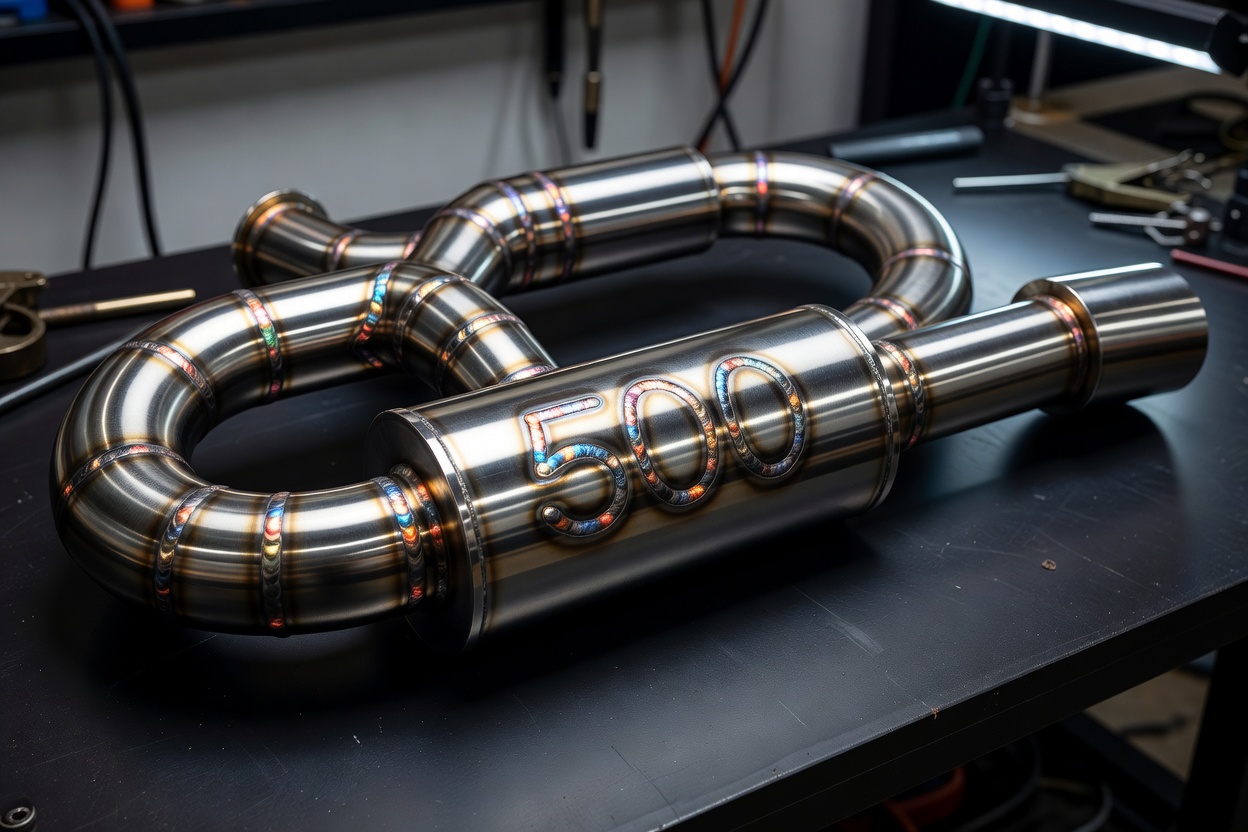
In a turbocharged heavy-duty application, the exhaust system serves a dual purpose: it must safely route extremely hot gases away from the chassis, and it must provide the lowest possible resistance to flow downstream of the turbocharger turbine. The more backpressure present in the exhaust system, the harder the engine has to work to expel gases during the exhaust stroke (pumping losses), and the slower the turbocharger will spool.
Backpressure vs. Scavenging
A common misconception in the automotive world is that engines "need backpressure" to generate low-end torque. This is functionally incorrect, especially for turbocharged engines. Naturally aspirated engines rely on exhaust gas velocity and pressure pulses to create a scavenging effect that pulls the next charge of air into the cylinder.
In a turbocharged engine, the turbine wheel itself creates an immense amount of backpressure. Downstream of that turbine wheel (the downpipe and tailpipe), the goal is zero restriction. The faster the exhaust gas can escape the turbine housing, the greater the pressure differential across the turbine wheel, which directly translates to faster spool times and lower Exhaust Gas Temperatures (EGTs).
Pipe Diameter and Mandrel Bends
Factory exhaust systems are frequently constructed using crush-bent tubing to save manufacturing costs. A crush bend on a 3.5-inch pipe can narrow the internal diameter to less than 3 inches at the apex of the curve, creating a severe bottleneck.
Upgraded systems utilize mandrel bending, a process where a solid steel rod is inserted into the pipe during bending to maintain a uniform internal diameter through the entire radius. For heavy-duty applications moving payloads above 15,000 lbs, upgrading from a factory 3.5-inch or 4-inch system to a 4-inch or 5-inch mandrel-bent system significantly increases volumetric flow.
| Pipe Diameter | Application Profile | EGT Reduction (Avg) |
|---|---|---|
| 4-Inch System | Stock to mild tune (Up to +100 HP) | -50°F to -100°F |
| 5-Inch System | Heavy towing / High power (+150 HP) | -100°F to -150°F |
| Dual Exhaust | Aesthetic primarily, heavy | No major gain over single 5" |
Material Selection: Aluminized vs. Stainless
Exhaust systems are subjected to extreme heat cycling, road salt, moisture, and soot. When selecting an upgrade, material choice dictates lifespan:
- Aluminized Steel: The most cost-effective option. It features a steel core dipped in an aluminum-silicon alloy. In dry climates, it can last 5-8 years. In areas where roads are salted, it will rust through rapidly at the weld points.
- 409 Stainless Steel: A mid-grade stainless with high iron content. It will develop surface rust over time but resists structural rot much longer than aluminized steel.
- 304 Stainless Steel: The premium tier. It contains higher chromium and nickel content, offering near-immunity to corrosion. It will not rust but will turn a golden/blue hue due to heat cycling.
Emissions Integration
For modern trucks equipped with Diesel Particulate Filters (DPF) and Selective Catalytic Reduction (SCR) systems, the exhaust path is heavily restricted by these necessary components. "Filter-back" exhaust systems replace only the piping behind these units, which alters the sound profile but offers minimal performance gains. True high-flow capability requires maximizing the downpipe diameter immediately off the turbo, while strictly adhering to local compliance regulations regarding catalyst retention.